AI echoes. Xmas Special: The Architect and the Machine – A parable
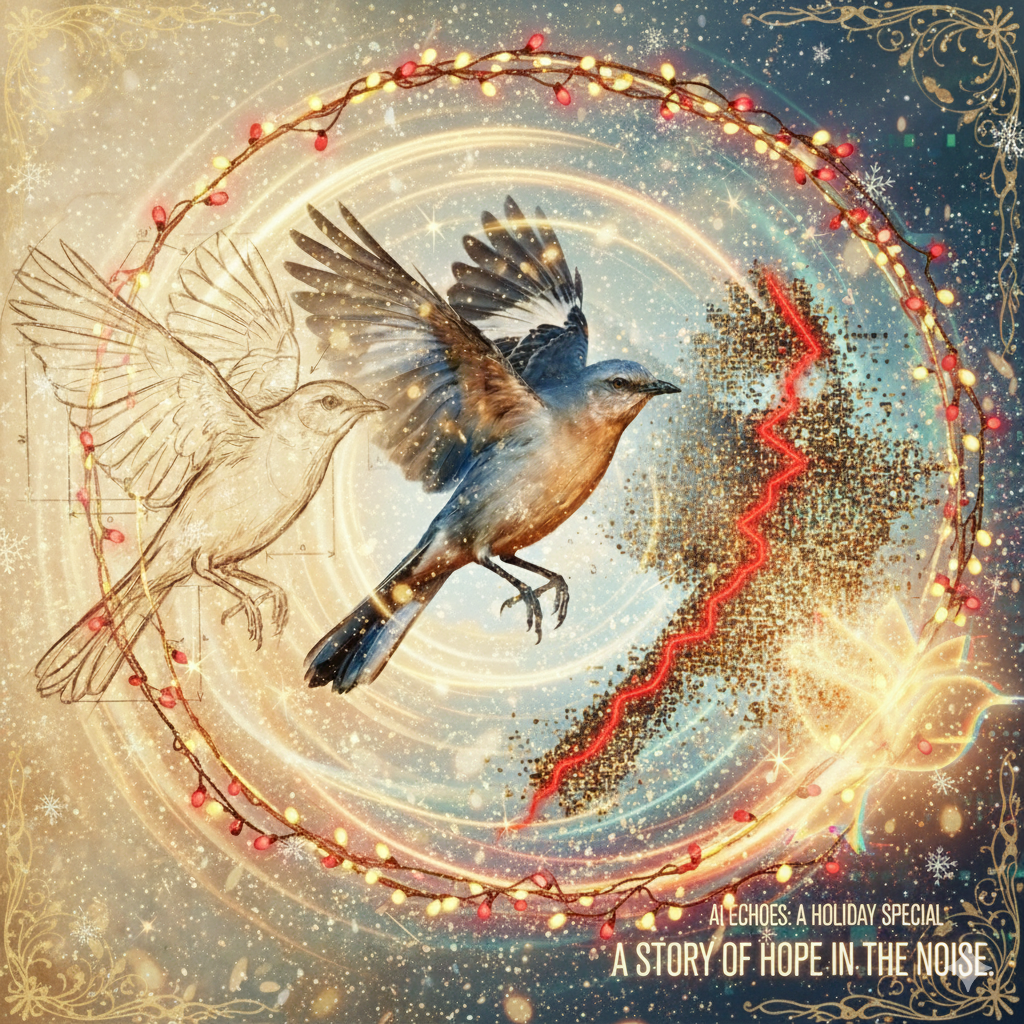
The Architect and the Machine
A Parable of the AI Age
Hello dear friends, wherever you are in this wide, wild world, and whatever you hold sacred, I am sending you a massive embrace of peace and love. We spend so much of our time here wrestling with the “noise”—trying to decode the chaos and the burning capital—but the holidays are a sacred permission slip to just stop, breathe, and zoom out. For this special edition, I’m setting aside the charts to offer you a simple story of hope: a retelling of the ancient Zen parable of The Farmer and the Horse, reimagined from the two previous episodes of AI echoes. I hope it is a gentle reminder that the very things that look like catastrophes today are often just the universe clearing space for the miracles of tomorrow.
There was once a Chief Architect who worked in the data center valleys of Northern Virginia. He had seen the dot-com boom, the crypto winter, and the mobile revolution. He was old enough to remember the sound of a dial-up modem and young enough to code in Python.
One year, the Great Compute Boom began. His company spent billions of dollars buying every H100 GPU they could find. They dug up the earth to build massive temples of silicon. The stock price tripled. The young engineers celebrated, buying fast cars and saying, “We are building God! This is the greatest fortune the world has ever seen!” The Architect looked at the invoices and said, “Maybe.”
Then, the Concrete Wall appeared. The chips were too hungry. They drank the power grid dry. The utility company said there was no more electricity for six years. The data centers sat idle, the screens dark. The investors panicked. “This is a disaster!” they cried. “We have built a Ferrari with no gas! We are ruined!” The Architect looked at the idle racks and said, “Maybe.”
So, the Giants became Barons. Desperate for power, the company spent a fortune to restart a dead nuclear plant and ordered a fleet of experimental reactors that didn’t exist yet. They burned shareholder money to force the atoms to move. The public mocked them. “What a waste!” the critics wrote. “Paying triple for electricity just to power a chatbot? This is the height of hubris!” The Architect watched the cooling towers steam up and said, “Maybe.”
Then, the Bubble Burst. The revenue didn’t come fast enough. The models hit a wall. The company went bankrupt, and the investors lost everything. The data centers were sold for pennies. The “Gigawatt Grab” was called the greatest financial mistake in history. The young engineers packed their boxes, weeping. “It was all for nothing,” they said. “We burned the world’s capital and left only ashes.” The Architect looked at the silent, nuclear-powered grid and said, “Maybe.”
Ten years passed. Because the nuclear plants were built to last eighty years, electricity became cheap and abundant. Because the chips were sold for scrap, computing became free. A new generation of doctors used the cheap compute to cure diseases. A new generation of teachers used the cheap energy to educate the world. The grid was green, and the air was clean. The people looked back and cheered. “The Bubble was a miracle!” they said. “The waste was actually a gift! We are living in a Golden Age!”
The Architect sat in his garden, watching the lights of the city glow brighter than ever before, and said…
“Maybe.”